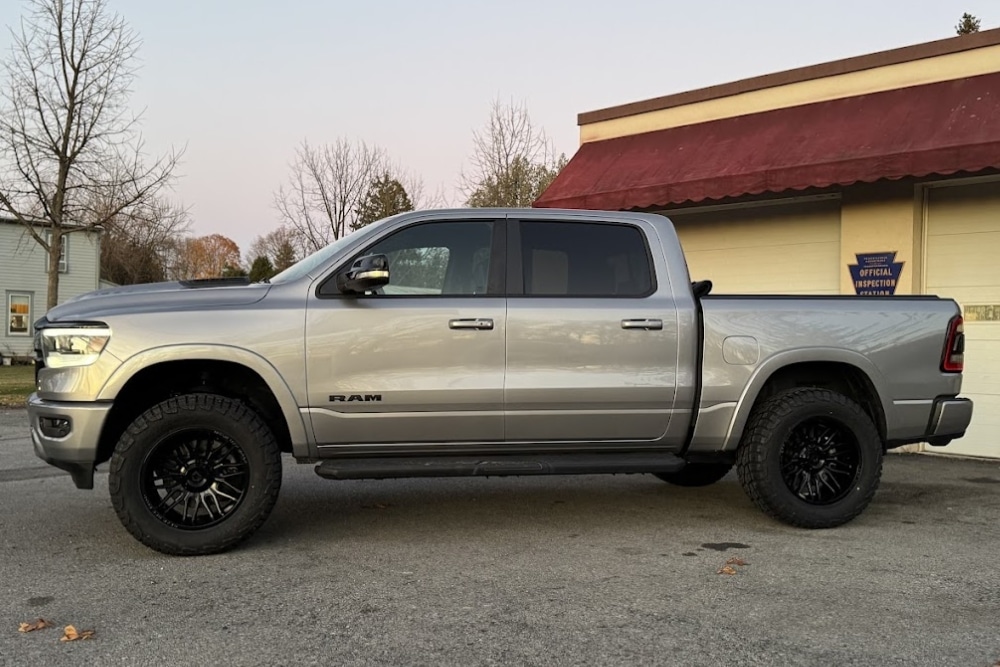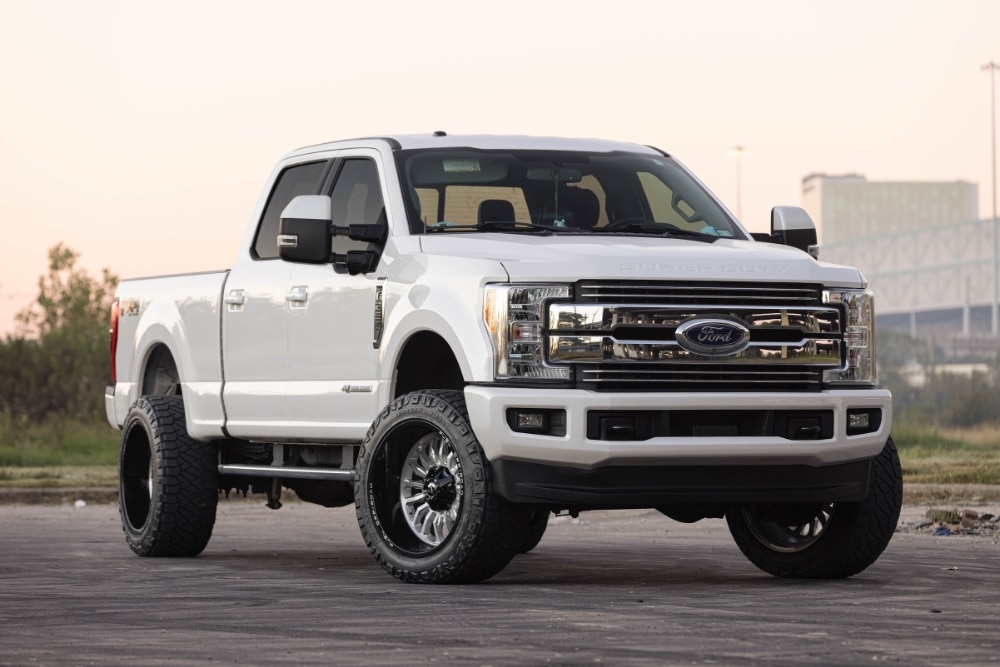
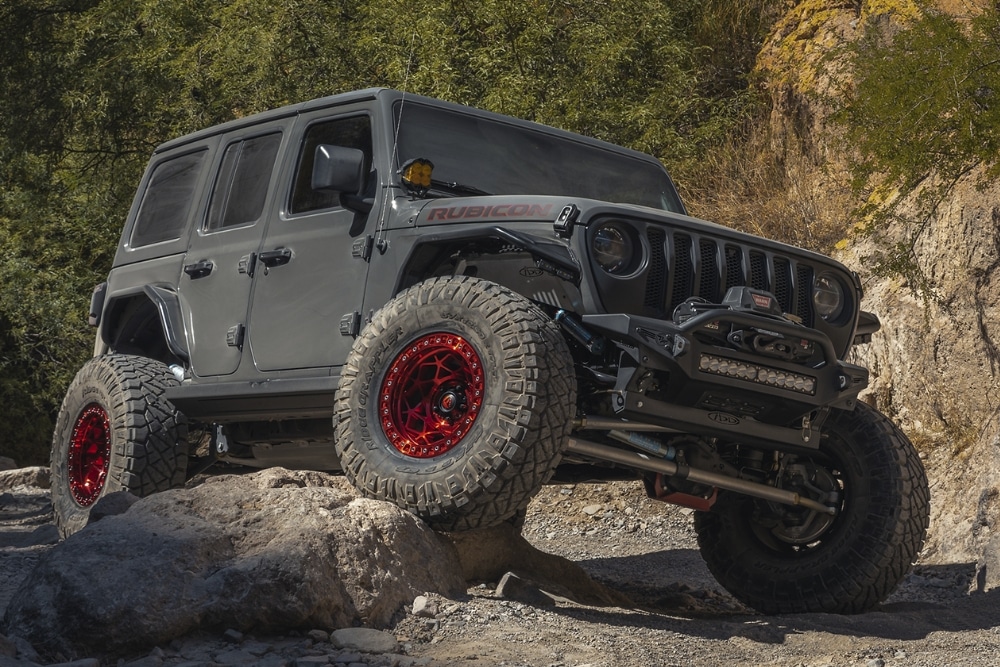
You just installed a killer lift kit, and those 35-inch tires look incredible. But now your Jeep feels sluggish off the line, your transmission hunts for gears on the highway, and your fuel economy tanked. Sound familiar? You’re not alone. Many off-road enthusiasts in the Lehigh Valley make the mistake of upgrading their wheels and tires without addressing what’s happening under the axles. That’s where expert off-road gearing comes in. At E-Motive Performance & Auto Repair in Mertztown, PA, we specialize in 4×4 gearing solutions that restore performance, improve drivability, and protect your investment in your build.
Re-gearing your axles isn’t just about fixing a problem. It’s about unlocking your vehicle’s full potential. Whether you’re running a lifted Jeep Wrangler on 37s or a Ram 2500 with aggressive all-terrains, proper gear ratios make all the difference between a capable trail machine and a struggling daily driver. Let’s break down why off-road gearing matters, how it works, and what you need to know before booking your next upgrade.
Why Off-Road Gearing Matters for Lifted Trucks and Jeeps
When you install larger tires, you’re effectively changing the final drive ratio of your vehicle. Think of it like switching from a 10-speed bike to a 3-speed. Your engine has to work harder to turn those bigger, heavier tires. This creates a cascade of problems that many off-roaders don’t anticipate until it’s too late.
Loss of Power and Acceleration
Bigger tires increase rotational mass and change your effective gear ratio. Your engine now needs more torque to get the same acceleration you had on stock tires. You’ll notice this immediately when merging onto Route 222 or climbing hills around Kutztown. Your truck or Jeep feels gutless, and you’re constantly downshifting just to maintain speed.
Transmission Strain and Premature Wear
Your automatic transmission wasn’t designed to push 35-inch or 37-inch tires with stock gearing. It hunts between gears, runs hotter, and experiences excessive wear on clutch packs and bands. While E-Motive provides essential transmission fluid and filter changes to maintain your drivetrain health, major transmission damage requires specialist intervention. The best solution? Re-gear before problems start, protecting your transmission from costly damage down the road.
Destroyed Fuel Economy
When your engine works harder to turn oversized tires, it burns more fuel. Period. Industry data shows drivers typically lose 3 to 5 MPG after installing larger tires without re-gearing. That adds up quickly, especially if you’re making daily commutes around the Lehigh Valley.
Poor Off-Road Performance
Ironically, the same setup that hurts your highway driving also limits your off-road capability. Without the right gear ratio, you lose low-end torque for technical crawling. Your engine bogs down on steep inclines, and you can’t maintain momentum through mud or rocks. Re-gearing restores that low-end grunt you need on the trails.
At E-Motive Performance & Auto Repair, we’ve seen countless builds where owners spent thousands on lifts, wheels, and tires but skipped the single most important upgrade: ring and pinion installation. Don’t make that mistake.
What Is Axle Re-Gearing and How Does It Work?
Axle re-gearing involves replacing the ring and pinion gears inside your differential housing. These gears determine your final drive ratio, which controls how many times your driveshaft rotates for each tire rotation. When you increase tire diameter, you need a numerically higher gear ratio to compensate.
Understanding Gear Ratios
Gear ratios are expressed as numbers like 3.73, 4.10, 4.56, or 4.88. A higher number means more engine revolutions per tire rotation, which translates to better acceleration and low-end torque. For example, if your Jeep Wrangler came with 3.73 gears and 32-inch tires, upgrading to 35-inch tires without re-gearing effectively drops your ratio to around 3.35. That’s why it feels slow.
Choosing the Right Gear Ratio
The best gear ratio for your build depends on several factors: tire size, vehicle weight, engine type, and how you use your truck or Jeep. Here’s a general guideline for Jeep re-gearing:
- 33-inch tires: 4.10 or 4.56 gears
- 35-inch tires: 4.56 or 4.88 gears
- 37-inch tires: 4.88 or 5.13 gears
Diesel trucks typically run deeper gears than gas engines due to their lower RPM power bands. A Ram 2500 Cummins on 37s might run 4.88s, while a similar gas-powered F-250 might need 5.13s or 5.38s.
At E-Motive Performance & Auto Repair, we calculate the optimal ratio based on your specific setup, driving habits, and performance goals. With years of experience in Jeep modifications and driveline system work, we’ll help you choose the right gearing for your build and ensure proper installation.
The Re-Gearing Process
Ring and pinion installation is precision work that requires specialized tools and expertise. The process involves:
- Removing axle shafts and differential carrier
- Measuring gear backlash and bearing preload
- Installing new ring and pinion set with proper shims
- Setting gear contact pattern using marking compound
- Reassembling with fresh differential fluid and seals
This isn’t a backyard project. Improper installation causes noise, premature wear, and catastrophic gear failure. Our team has extensive experience with Jeep modifications and driveline system work to ensure every re-gear meets factory specifications.
Locking Differentials: The Other Half of Off-Road Gearing
Re-gearing restores your drivetrain’s power delivery, but locking differentials take your off-road capability to the next level. If you’re serious about trail running in the mountains near Oley or rock crawling at local off-road parks, lockers are essential.
How Locking Differentials Work
Your factory open differential sends power to the wheel with the least resistance. When one tire lifts off the ground or loses traction, that’s where all the power goes. You get stuck. A locking differential forces both wheels to turn at the same speed, maintaining forward momentum even when one tire is in the air.
There are three main types of locking differentials:
- Selectable Lockers: Engage and disengage with a switch or air compressor, offering the best of both worlds: open differential for street driving, locked for trails.
- Automatic Lockers: Engage mechanically based on wheel speed difference. They’re always ready but can feel clunky during tight turns on pavement.
- Limited-Slip Differentials: Not true lockers, but better than open diffs. They use clutch packs or gears to transfer some torque to the wheel with traction. Good for mild off-roading but not as effective as full lockers.
Front vs. Rear Lockers
Most off-roaders start with a rear locker since it handles the majority of traction duties. A rear locker dramatically improves your ability to climb steep grades and power through mud. If you tackle technical terrain regularly, adding a front locker turns your rig into an unstoppable machine. We’ve installed countless locking differentials on Jeep Wranglers, Gladiators, and full-size trucks for clients throughout Mertztown and the surrounding areas.
Locker Installation Considerations
Installing locking differentials requires the same precision as ring and pinion installation. In many cases, we perform both services simultaneously since the differential is already disassembled. This saves labor costs and downtime. We also upgrade axle shafts, bearings, and seals while we’re in there to ensure your entire drivetrain can handle the increased stress of off-roading.
The E-Motive Difference: Why Choose Us for 4×4 Gearing in Mertztown
Anyone can bolt on a lift kit or mount a set of tires. True off-road performance requires understanding the engineering behind your build. At E-Motive Performance & Auto Repair, we’re not just parts installers. We’re enthusiasts who know what works on the trail because we’ve been there ourselves.
- Jeep re-gearing specialists – Known throughout the Lehigh Valley for expert work on JK Wranglers, JL Rubicons, and all Jeep platforms
- Premium gear brands – We work with premium gear manufacturers to deliver reliable, quiet installations that meet or exceed factory specifications.
- Complete drivetrain solutions – Lift kits (Readylift, Rough Country, BDS, Teraflex, Cognito), custom wheels (Fuel, Method, Vossen, American Force), and tires (Falken, Toyo, Nitto) all under one roof
- Modern shop technology – Digital vehicle inspections, text-to-pay, and financing through Affirm, Acima, Klarna, Snap, and Sunbit
- Pickup and drop-off service – No waiting room time wasted
- Fast, professional service – We complete re-gears efficiently without compromising quality, and we’ll keep you updated throughout the process
- 24-month/24,000-mile warranty – Every installation backed by our comprehensive coverage
Ready to discuss your off-road gearing project? Visit us at 244 Bowers Road, Mertztown, PA 19539, or call (610) 360-5553 to schedule your consultation. We serve Jeep and truck owners throughout Topton, Fleetwood, Blandon, Macungie, and Boyertown.
Real-World Benefits of Professional Off-Road Gearing in Mertztown
Let’s talk about what happens after proper axle re-gearing. These aren’t theoretical benefits. These are real improvements our Mertztown customers experience every day.
Restored Power and Drivability
After re-gearing, your truck or Jeep accelerates as it should. Your transmission stays in the correct gear on the highway. You can merge confidently and pass slower traffic without flooring the throttle. The difference is night and day compared to running oversized tires on stock gears.
Improved Fuel Economy
While you’ll never match factory MPG on 35-inch tires, proper gearing recovers 70 to 80 percent of your lost fuel economy. Your engine operates in its optimal RPM range instead of constantly lugging under load. Proper gearing can help you recover 2 to 3 MPG compared to running oversized tires on stock gearing, which pays for itself over time.
Enhanced Off-Road Capability
Correct gear ratios give you the low-end torque needed for technical trail work. You can crawl slowly over obstacles without riding the brakes. Your engine stays in its power band during steep climbs. Combined with locking differentials, you’ll tackle terrain that would have stopped you cold before.
Reduced Wear on Drivetrain Components
Your transmission, transfer case, and CV joints last longer when your drivetrain isn’t constantly stressed. Re-gearing is preventative maintenance that protects your investment in your build. It’s much cheaper than replacing a blown transmission at 80,000 miles because you ran 37s on stock gearing for years.
FAQs About Off-Road Gearing and Axle Re-Gearing in Mertztown
Do I need to re-gear my Jeep if I get bigger tires?
Yes, re-gearing is necessary when upgrading to significantly larger tires to maintain proper engine RPM and protect your drivetrain components. Without re-gearing, your engine works harder, fuel economy drops, and transmission wear accelerates significantly.
What is the best gear ratio for 35-inch tires?
The best gear ratio for 35-inch tires is typically 4.56 or 4.88, depending on your vehicle’s engine type and weight. Diesel engines with more low-end torque may perform well with 4.56 gears, while gas engines usually need 4.88 gears for optimal performance.
Can I re-gear just one axle on my 4×4?
Technically yes, but we don’t recommend it for 4×4 vehicles since your front and rear axles should maintain the same gear ratio to prevent drivetrain binding and transfer case damage. If you’re on a tight budget, prioritize the rear axle first, but plan to match the front within a reasonable timeframe.
Will re-gearing affect my speedometer?
Modern vehicles with electronic speedometers can be recalibrated using a handheld programmer after re-gearing to ensure accurate speed readings. Older vehicles with mechanical speedometers may require a gear change in the transfer case or transmission housing.
What does a locking differential do for off-roading?
A locking differential forces both wheels on an axle to turn at the same speed, maintaining traction even when one wheel loses grip. This prevents power from transferring only to the slipping wheel, allowing you to navigate mud, rocks, and steep terrain more effectively.
How does re-gearing improve fuel economy?
Re-gearing improves fuel economy by allowing your engine to operate in its optimal RPM range instead of constantly lugging under load. When your gear ratio matches your tire size, your engine doesn’t work as hard to maintain highway speeds, which reduces fuel consumption by 2 to 3 MPG compared to running oversized tires on stock gearing.
Schedule Your Off-Road Gearing Service in Mertztown Today!
Don’t let improper gearing hold back your off-road build. Whether you’re planning your first lift and tire upgrade or finally addressing sluggish performance on your existing setup, E-Motive Performance & Auto Repair has the expertise to dial in your drivetrain. Our team specializes in Jeep re-gearing, truck differential service, and complete 4×4 modifications for enthusiasts throughout Mertztown and the Lehigh Valley. We combine old-school mechanical knowledge with modern technology to deliver results you can feel on every drive. Fast turnaround times, transparent pricing, and honest advice set us apart from shops that just want to sell you parts. Ready to unleash your rig’s full potential? Visit us at E-Motive Performance & Auto Repair, 244 Bowers Road, Mertztown, PA 19539, or call 610-360-5553 to schedule your consultation. Let’s gear it right.